
Join 100,000+ business leaders
Subscribe to get our most-popular proposal eBook and more top revenue content to help you send docs faster.

Most financial institutions already use e-signatures. But before certain legally required documents can be delivered electronically, consumers must first receive specific disclosures and provide consent under the federal E-SIGN Act.
A checkbox alone may not be enough. This article explains the key consumer consent requirements, common gaps, and what financial institutions should consider when building compliant electronic document workflows.
This article is for general information only and does not constitute legal advice. Consult your compliance or legal team about your specific obligations.
The consumer consent requirements generally apply when:
For banks and credit unions, this may include certain account disclosures, periodic statements, and lending documents covered by Regulations E, Z, and DD or NCUA Part 707.
Not every electronic document requires E-SIGN consent. However, when different documents use the same electronic delivery process, that process should meet the requirements that apply to the regulated documents.
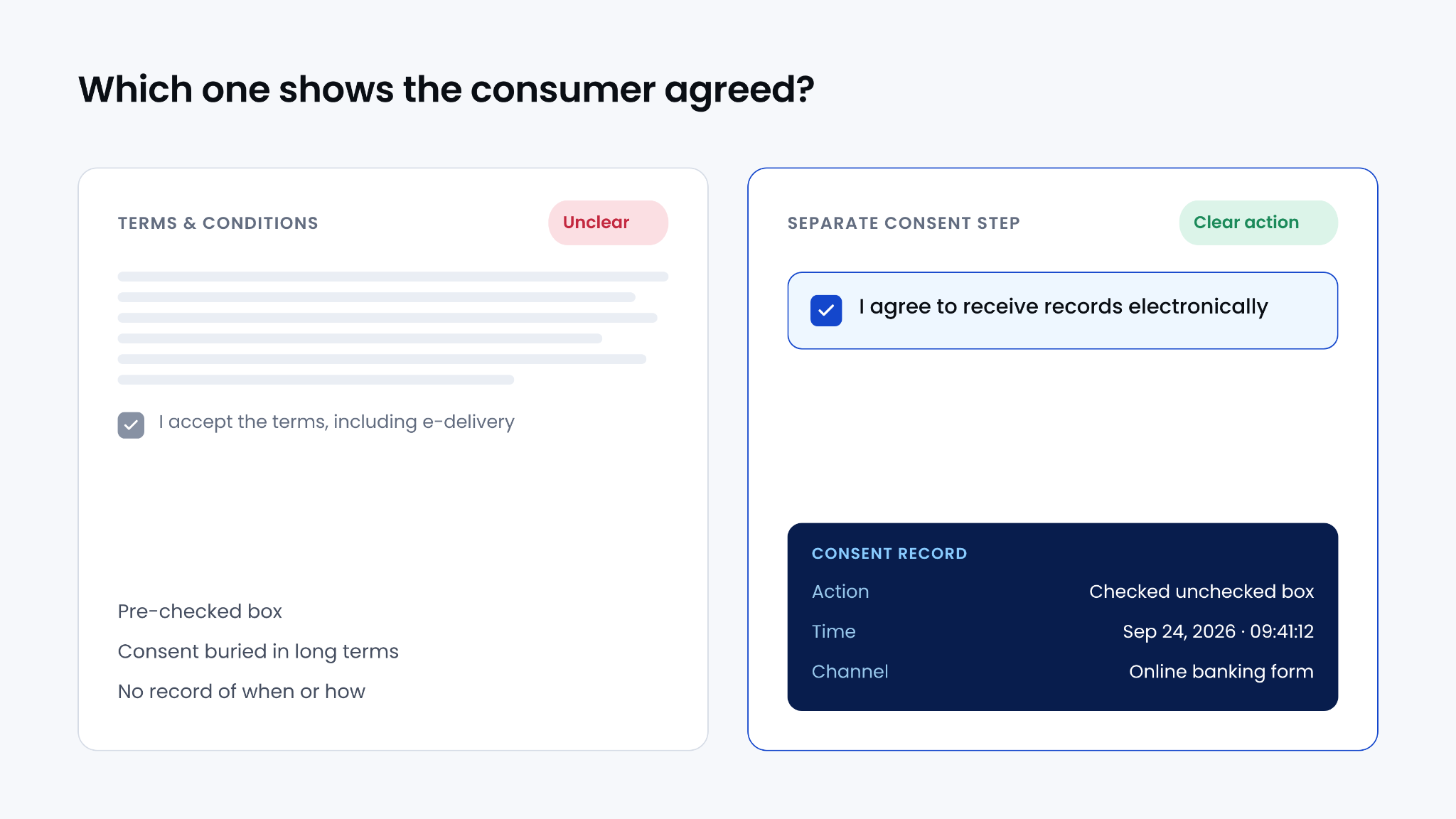
The consumer must actively agree to receive records electronically. Their consent must be based on a clear action, such as selecting an unchecked box or clicking an “I agree” button.
Pre-checked boxes, consent hidden in lengthy terms, or continued use of online banking may not clearly demonstrate agreement.
Common gap: The institution cannot show exactly when and how the consumer agreed to electronic delivery.
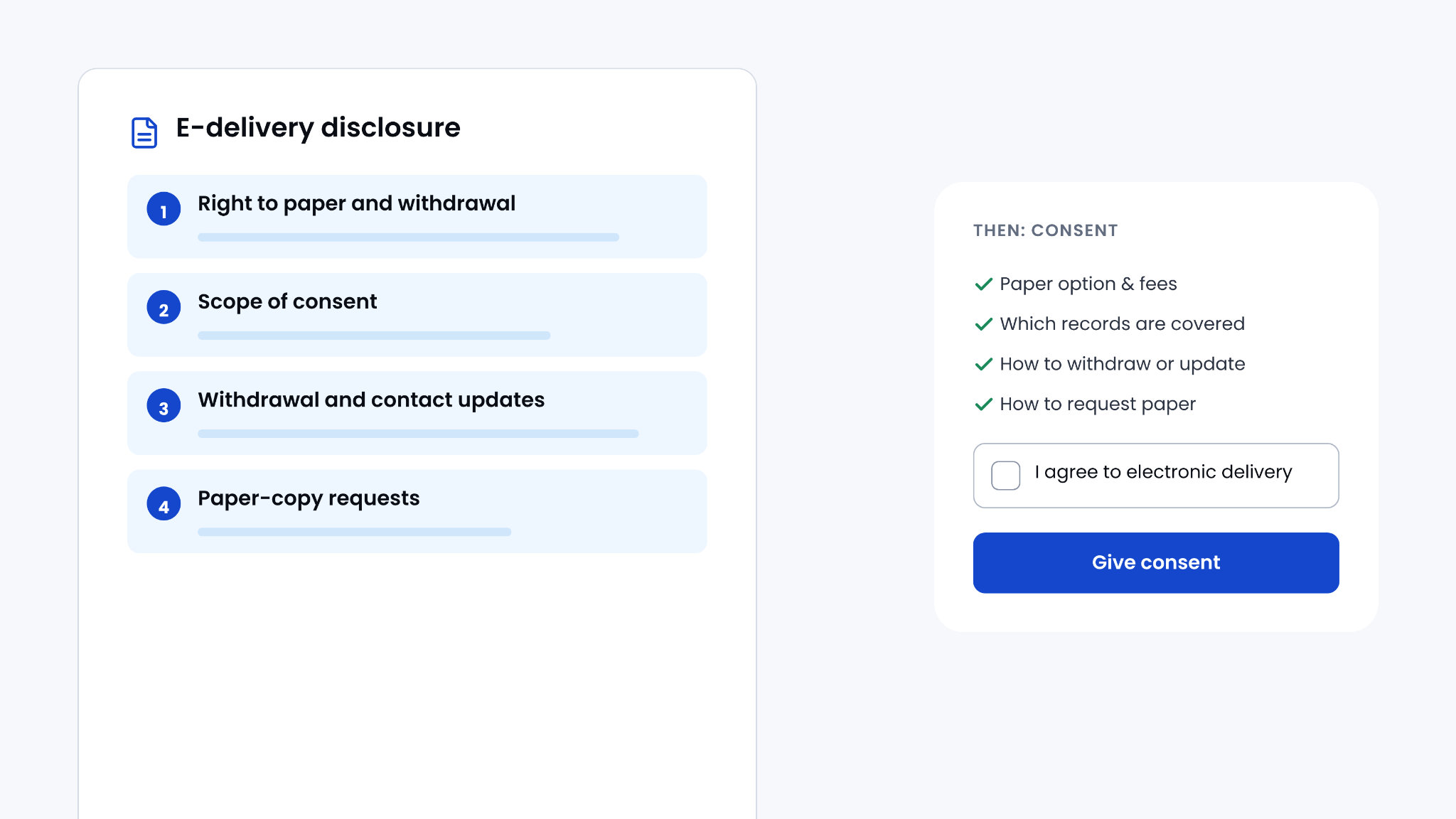
Before requesting consent, the institution must provide a clear disclosure explaining:
Right to paper and withdrawal
Consumers must be told whether they can receive paper records and how to withdraw their consent. Any related fees or consequences must also be disclosed.
Common gap: The disclosure mentions paper copies but does not explain withdrawal rights, fees, or consequences.
Scope of consent
The disclosure must explain whether consent applies to one transaction or to specific categories of future records.
Common gap: Consent collected for one transaction is later used for other documents that were not included in the original disclosure.
Withdrawal and contact updates
Consumers must receive clear instructions for withdrawing consent and updating their electronic contact information.
Common gap: The disclosure says “contact us” but does not provide a specific process, such as a phone number, online form, or account settings page.
Paper-copy requests
Consumers must be told how to request paper copies and whether a fee applies.
Common gap: Paper copies are mentioned, but the request process and applicable fees are not explained.
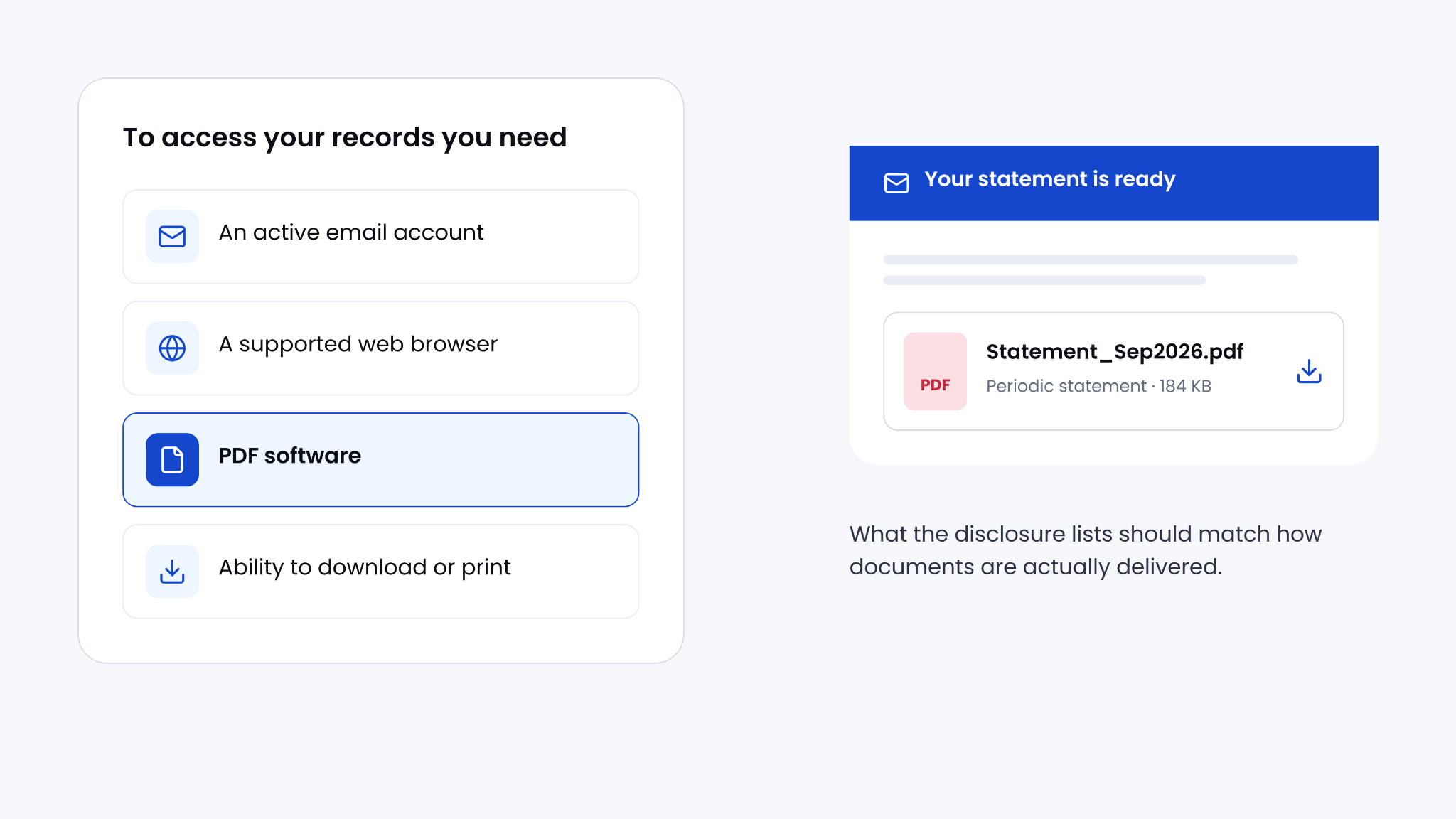
Before giving consent, consumers must know what technology they need to access and keep electronic records. Depending on the delivery method, this may include an active email account, a supported browser, PDF software, and the ability to download or print files.
The statement should be simple, specific, and consistent with how documents are actually delivered.
Common gap: The requirements are missing or incomplete. For example, the disclosure mentions a web browser but does not explain that records will be delivered as PDF files.
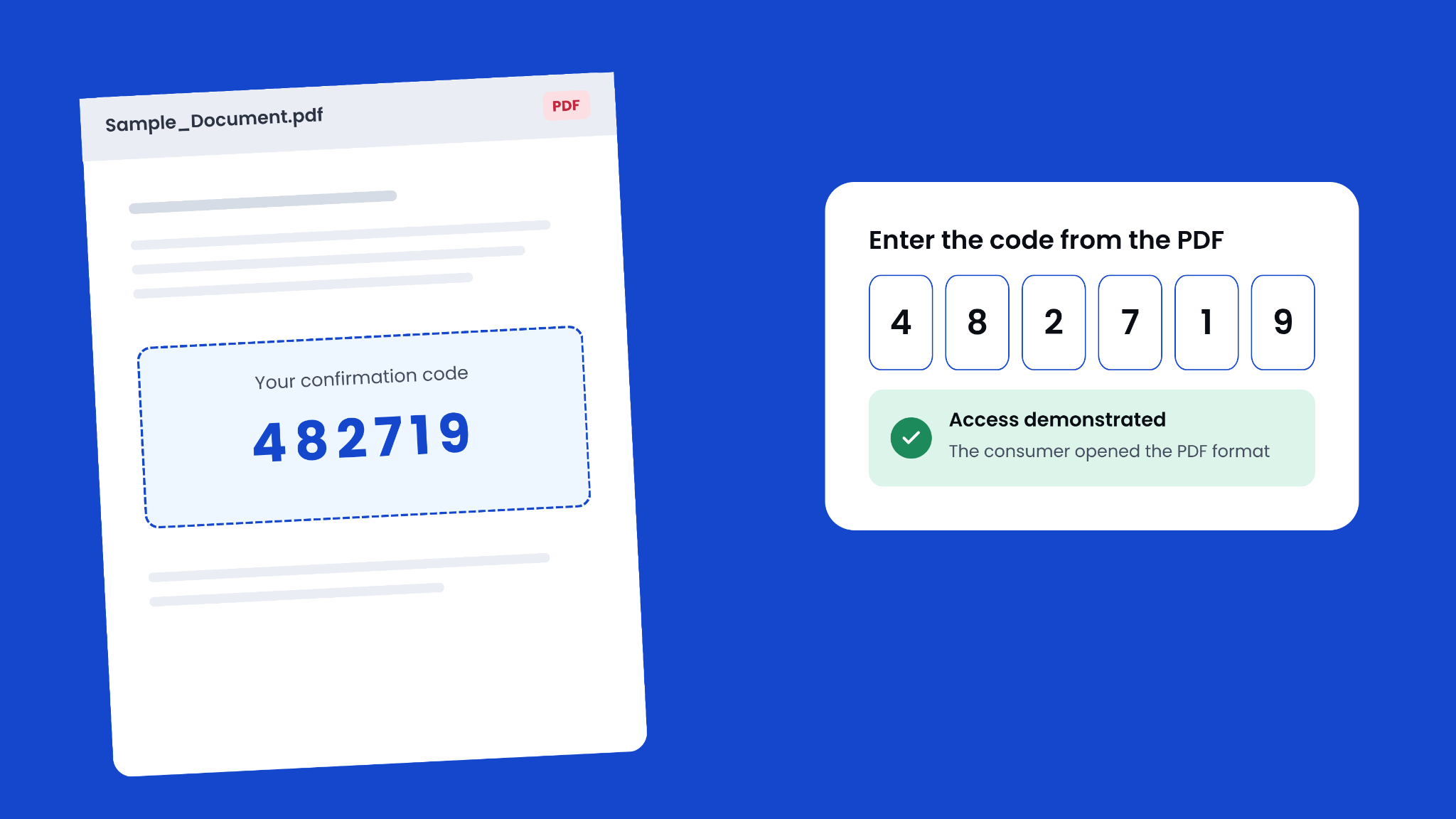
Consumers must consent electronically in a way that reasonably demonstrates they can access records in the format the institution will use.
For example, the institution could provide a sample PDF and ask the consumer to enter a code shown inside it. This confirms the consumer could open the file—not simply check a box stating they can.
Common gaps:
A phone call or its recording does not replace the required electronic consent.
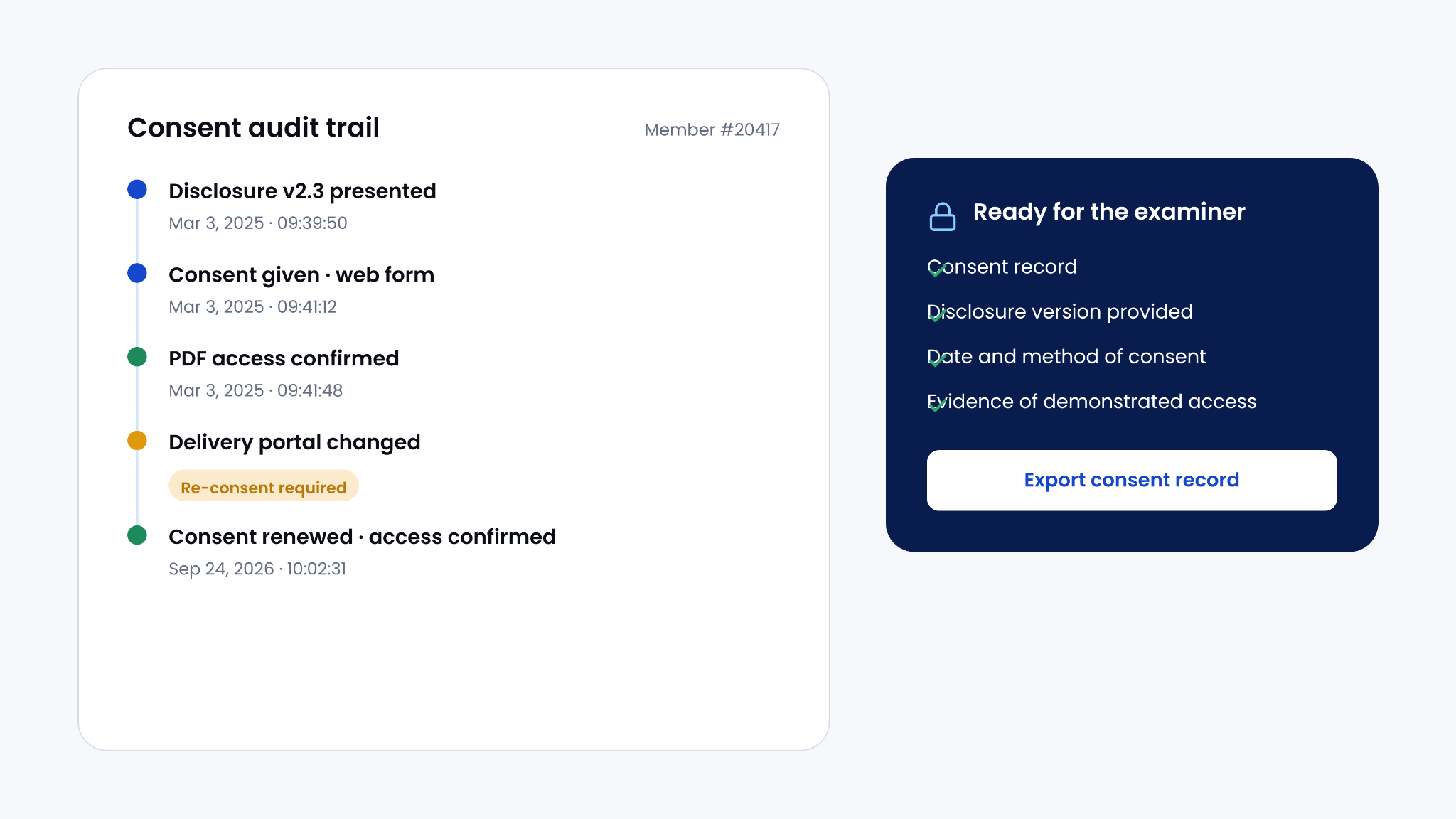
If updated hardware or software requirements create a material risk that consumers may no longer be able to access or retain their records, the institution must:
Common gap: The institution changes its document format, portal, or delivery process without reviewing whether new consent is required.
Retain the evidence
Electronic records must remain accurate and accessible for the required retention period. This includes the consent record, the disclosure version provided, the date and method of consent, and evidence of demonstrated access.
The institution should be able to produce this information if requested by an examiner.
Review the exceptions
E-SIGN does not cover every type of record. Certain notices involving default, foreclosure, repossession, eviction, or a consumer’s primary residence may require another delivery method.
Review applicable exceptions with your compliance or legal team before moving all notices to electronic delivery.
Build consent into the workflow
Consent should be a separate, documented step—not just a checkbox added to the e-signature process.
DocStudio can be configured to support this process through:
E-signature is only one part of the process. DocStudio helps financial institutions manage the steps that come before and after it.
See how DocStudio supports structured document workflows for banks and credit unions — book a demo!

.png)
.png)